
Like the old Internet but designed for automation and AI deployment
Today’s data exchange infrastructure was built in the 1990s to increase access to data for human decisions.
Modern supply chains operate at digital speed, but the data they rely on is often ambiguous or non-authoritative. Preservation of data sources for verification was never considered when the old Internet was built.
Part numbers are not globally unique, supplier identities can be unclear, and errors propagate automatically once they enter ERP or AI-assisted systems. Methods are now being used to compensate for and automate in an outgrown infrastructure – but machines cannot pause to validate information, so trust in data must exist before automation occurs.
A governed operating environment
Defined within the ISO 25500 standards for Supply Chain Interoperability, the Industrial Internet is a global environment where every company, product, and part number can be uniquely identified, verified, and trusted by machines before supply chain transactions happen.
The Industrial Internet defines a governed operating environment where every identifier is :
- globally unique
- issued by a known authority
- verifiable before use.
This removes ambiguity, impersonation, and anonymous identifiers, creating a machine-safe foundation for global commerce.
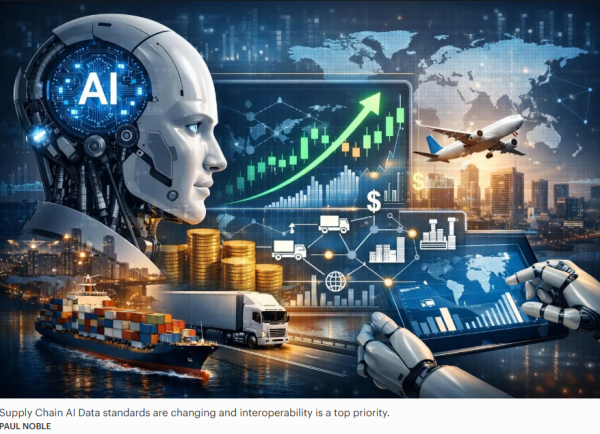
Read the Forbes article by Paul Nobel, Founder of Verusen AI, on how the Industrial Internet changes the game for global supply chains
Listen to the Podcast
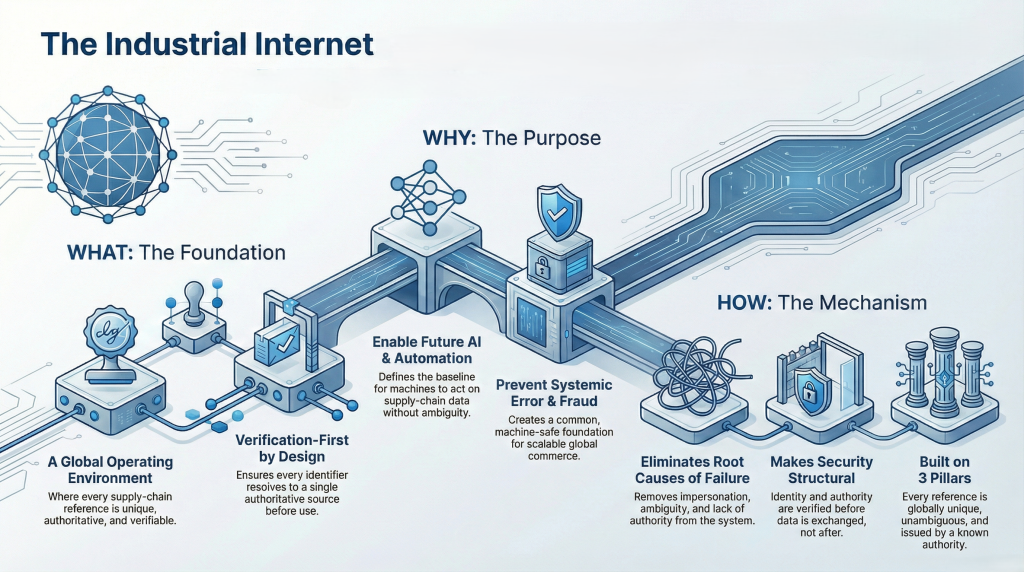
Data Standards driving the the future of commerce
ISO 25500 is the international standard for Supply Chain Interoperability and Integration, which defines the founding principles for the Industrial Internet.
The standards defines the Industrial Internet as an: “efficient and trusted environment for sharing industrial data using callback security where the legal identity of the party requesting data verification and the legal identity of the party replying to the request are verified”.
The standards define a common language and structure for data verification. Verified trusted data allows modern supply chains to operate securely at machine speed.